
Building Generational Agility: Leadership That Meets People Where They Are
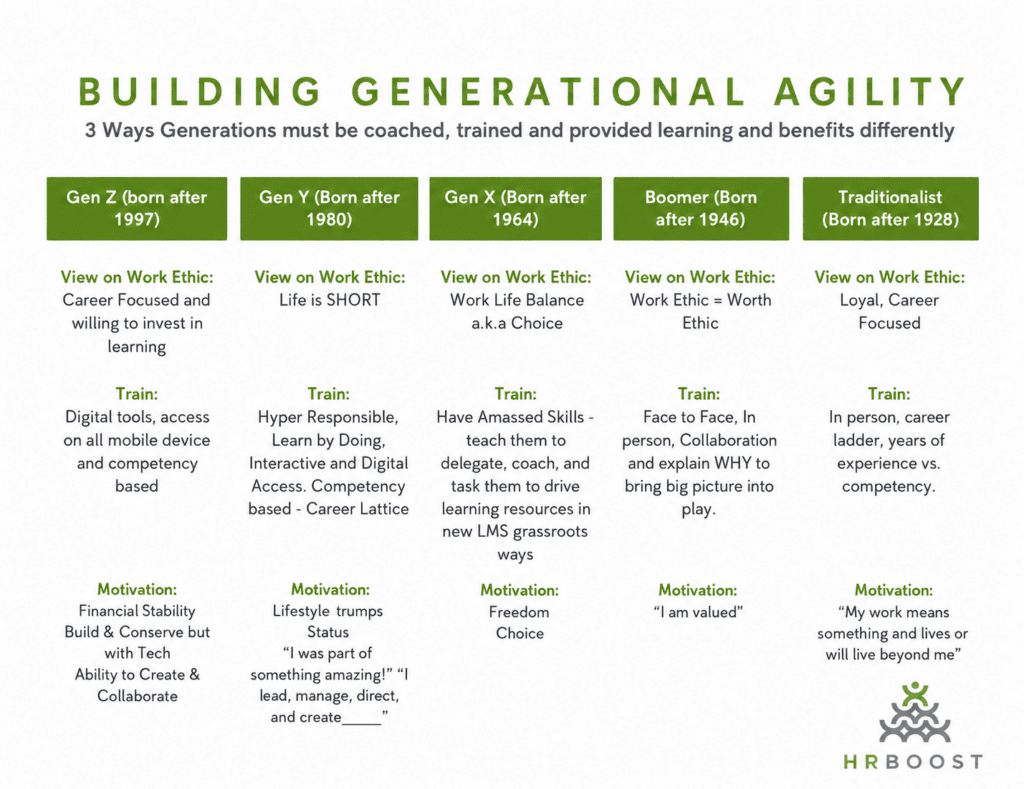
Several years ago, I created a simple resource called Building Generational Agility. At the time, it was designed to help leaders better understand the different perspectives generations bring to the workplace and how those differences influence communication, motivation, and development.
Looking back, I don’t think I realized how relevant that conversation would become.
Today’s workplace is unlike anything we’ve experienced before. Many organizations are leading hybrid teams, communicating primarily through technology, integrating contractors and freelancers into their workforce, and bringing together as many as five generations of employees, each shaped by different experiences and expectations.
That reality has changed what effective leadership looks like.
Too often, I hear conversations about generational differences that focus on stereotypes. Baby Boomers are described one way. Millennials another. Gen Z another. While there may be broad characteristics that help us understand each generation, leadership cannot stop there.
Generational agility isn’t about putting people into categories.
It’s about understanding people well enough to lead them effectively.
One of the biggest leadership mistakes I see is believing that treating everyone the same is the same as treating everyone fairly.
It isn’t.
Great leaders don’t lower expectations. They adapt how they communicate, coach, develop, and motivate while keeping expectations clear and consistent.
That’s generational agility.
I’ve watched organizations struggle because leaders assumed everyone wanted feedback the same way, learned the same way, or was motivated by the same things. Those assumptions create frustration on both sides.
I’ve also seen what happens when leaders become curious instead.
They ask questions.
They listen.
They adjust.
The result isn’t lowering standards. It’s creating an environment where people have the opportunity to perform at their best.
Consider just a few examples.
Some employees appreciate quick, digital communication and frequent feedback. Others value face-to-face conversations and time to process information before responding.
Some are motivated by flexibility and purpose. Others are driven by stability, recognition, or the opportunity to leave a lasting legacy.
None of these motivations are right or wrong.
They’re simply different.
The role of leadership is not to expect everyone to think alike. The role of leadership is to understand those differences well enough to bring people together around a common purpose.
As our workplaces continue to evolve, I believe generational agility is becoming one of the most important leadership competencies organizations can develop.
Not because generations define people.
But because effective leaders recognize that every person brings different experiences, different perspectives, and different strengths to the table.
Leadership has never been about having all the answers.
It’s about creating the conditions where people can do their best work together.
That begins by meeting people where they are.
At HRBoost, we help organizations build workplaces where people, culture, and business strategy work together. Developing generational agility is one way leaders can strengthen communication, improve engagement, and create stronger teams for the future.
If you’d like to learn more about building generational agility within your organization, we’d love to start a conversation.
Schedule a conversation with HRBoost at hrboost.com/schedule.
